
 Azərbaycanca
 English
 Русский
.webp)

In the modern world, with the rise of urbanization and high-rise buildings, elevators have become an integral part of our lives.
In the modern world, with the rise of urbanization and high-rise buildings, elevators have become an integral part of our lives. Whether in residential buildings, commercial centers, or industrial facilities, elevator installation (lift montage) is a complex process that requires specialized engineering knowledge, precision, and strict adherence to safety standards. This blog post will thoroughly examine the elevator installation process, types, safety regulations, and key points to consider in this work.
What is Elevator Installation and Why is it Important?
Elevator installation is not just about ensuring a cabin moves up and down. It is the integration of long-lasting mechanical and electronic systems, adapted to the building's architecture, ensuring the safety of passengers and loads. Improperly installed elevators can frequently break down in the future, operate with high noise, and worst of all, pose a danger to human life. Therefore, elevator installation must strictly be carried out by certified specialists.
Types of Elevators and Selection Criteria
Before starting the installation process, the appropriate elevator type must be selected according to the building's needs. The most commonly used types during elevator installation are:
-
1. Passenger Elevators: Designed for residential buildings, hotels, and offices. The main goal is the comfortable and fast transportation of people. Design and speed are key factors in these elevators.
-
2. Freight Elevators (Cargo Lifts): Ideal for factories, warehouses, and commercial centers. These elevators have a larger cabin and higher load capacity (e.g., from 1000 kg to 5000 kg).
-
3. Hospital Elevators: Specifically designed for hospitals. These lifts must have a deep cabin for easy stretcher access and a very smooth movement mechanism to prevent patient jolting.
-
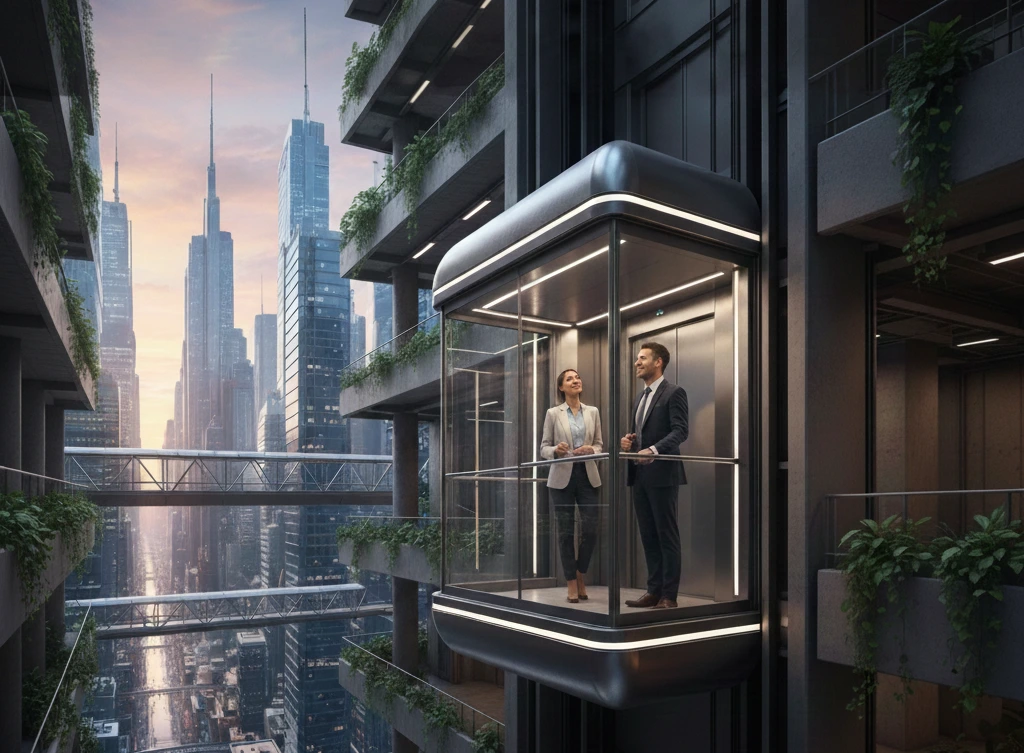
4. Panoramic Elevators: Intended for commercial centers and business plazas where aesthetic appearance is paramount. The cabin is usually made of glass.
-
5. Cottage and Villa Elevators (Home Lifts): Compact lifts designed for private homes, featuring low speed but high comfort.
The Elevator Installation Process: Step-by-Step
Elevator installation is a technical process consisting of several stages. Each stage is closely linked and must be performed sequentially.
-
Stage 1: Design and Engineering Calculations The most crucial part of the work begins on paper. Shaft dimensions, floor-to-floor distance, required speed, and load capacity are calculated. Engineers determine the system the elevator will operate on (electric, hydraulic, or geared/gearless).
-
Stage 2: Shaft Preparation and Inspection The tunnel (shaft) in which the elevator will move must be clean, dry, and fire-resistant. Installers check if the shaft walls are vertical (plumb) using laser devices. If there is curvature, it can cause the elevator to vibrate.
-
Stage 3: Installation of Guide Rails (Rays) The elevator cabin and counterweight do not hang in the air; they move on special steel rails. The process of fastening these rails to the wall requires millimetric precision. The rail connection points must be smoothed so that passengers do not feel any "clanking" when the elevator moves.
-
Stage 4: Motor and Mechanical System Assembly The motor, considered the "heart" of the elevator, is usually installed in the machine room at the top of the shaft or directly inside the shaft (Machine Room Less - MRL lifts). Ropes (cables), speed limiters, and braking systems are placed in this stage.
-
Stage 5: Cabin and Doors Installation The cabin platform is assembled, and its walls are erected. Simultaneously, the floor doors (external doors) are placed on each floor. The proper functioning of the door mechanisms is crucial because a significant portion of elevator malfunctions occurs in the door systems.
-
Stage 6: Electrical Wiring and Control Panel The control panel is the "brain" of the elevator. The connection between all sensors, call buttons, safety circuits, and the motor is established via electrical cables. This system operates with complex software.
-
Stage 7: Testing and Commissioning After the physical installation is complete, the elevator is not immediately put into use. Specialists test the elevator with different loads (empty, half-full, fully loaded). Braking distance, the speed of door opening/closing, and in-cabin vibration are tested.
Safety Standards in Elevator Installation
In Azerbaijan and internationally, elevator installation is regulated by strict standards (e.g., EN 81 European standards). The existence of the following systems is mandatory for safety:
-
Parachute System (Safety Gear): A mechanism that locks the elevator to the rails and stops it if the ropes break or the speed exceeds the norm.
-
Overload Sensor: A system that stops the movement if the elevator is loaded beyond the norm.
-
UPS (Emergency Rescue System): A battery system that brings the elevator to the nearest floor and opens its doors when the power is cut.
-
Light Barriers: Sensors that prevent the doors from closing if there is a person or object between them.
Key Points to Consider When Choosing an Elevator
If you are a construction company or building owner looking to order an elevator, you should pay attention to the following factors in addition to the price:
-
Energy Efficiency: Modern elevators (especially gearless motors and regenerative drives) consume 40-50% less energy than older models.
-
Noise Level: Silent operation of the elevator is important for comfort in residential buildings.
-
Technical Service Capabilities: It is important that the company installing the elevator can quickly provide spare parts and offer 24/7 service.
-
Warranty Period: Quality elevator companies typically offer a 1-3 year warranty after installation.
Technical Maintenance After Elevator Installation
Elevator installation is only the beginning of the process. Monthly technical maintenance (service) is mandatory for the elevator to work problem-free for many years. During maintenance, lubrication, cleaning, tension checking of the ropes, and testing of safety circuits are performed. Remember that timely service both puts safety at risk and leads to more expensive repair costs in the future.
Elevator Installation Prices in Baku
Elevator prices vary depending on many factors:
-
Number of floors (number of stops).
-
Elevator's load capacity.
-
Interior design (stainless steel, glass, gilded coating, etc.).
-
Country of manufacture (European, Turkish, Chinese elevators).
-
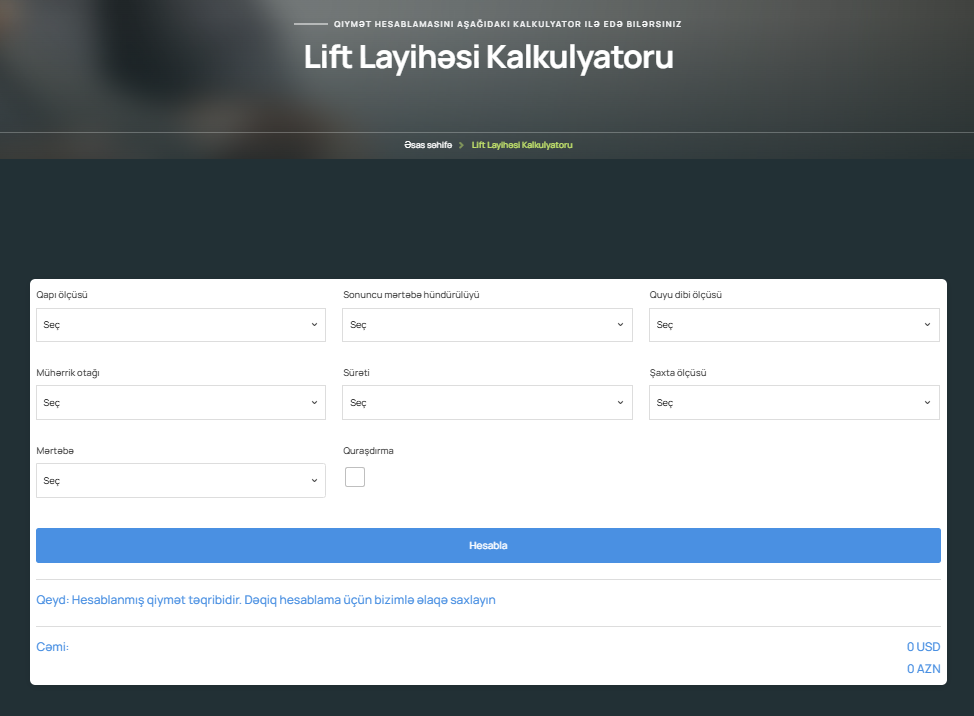
Mechanism type (MRL, Hydraulic). You must request an on-site inspection and estimate from professional companies to get an accurate price.
Conclusion
Elevator installation is a serious investment that directly affects the value of the building and the quality of life of its residents. In this process, professionalism, quality materials, and safety standards should be prioritized. Elevators installed with correct planning and a professional installation team will provide safe and comfortable service for decades. If you are looking for reliable elevator installation services for your building, be sure to contact licensed companies with a portfolio of successful projects.
Frequently Asked Questions (FAQ)
-
1. How long does elevator installation take? Depending on the elevator type and number of floors, the assembly of a standard passenger elevator can take an average of 2-4 weeks. However, ordering and importing the elevator can take 1-3 months.
-
2. How often should the elevator be inspected after installation? Based on legislation and safety rules, preventative technical maintenance should be carried out on elevators at least once a month.
-
3. Which elevator is better: Hydraulic or Electric? Electric (cable) elevators are better for high-rise buildings and places requiring high speed. For low-rise buildings (maximum 4-5 floors) or homes, hydraulic lifts can be quieter and more economical.
-
4. Is it possible to install an elevator in old buildings afterward? Yes, it is possible. If there is no shaft space inside the building, an elevator can be installed by assembling a metal-structured shaft on the building's facade (outside).



.png)
.png)